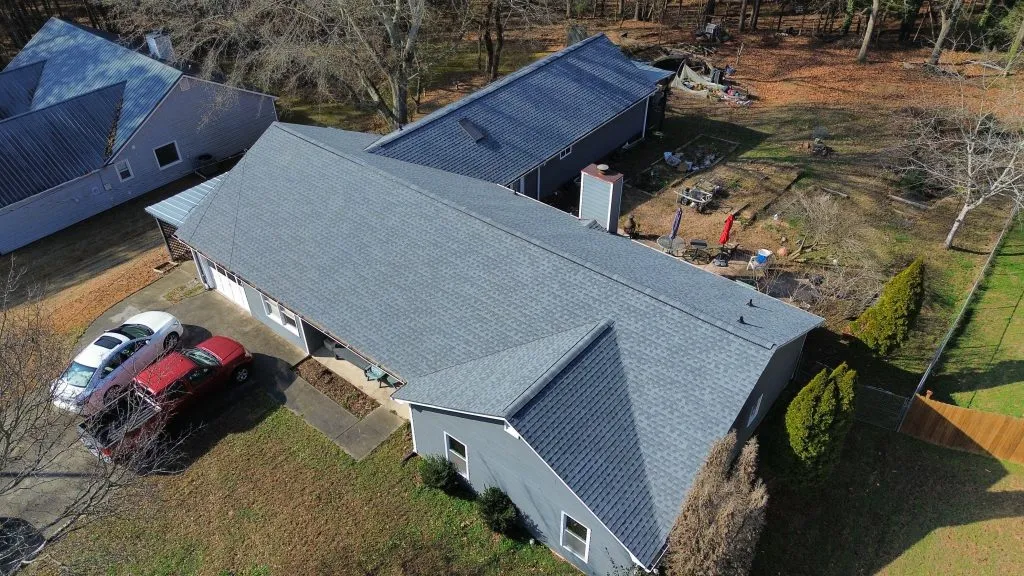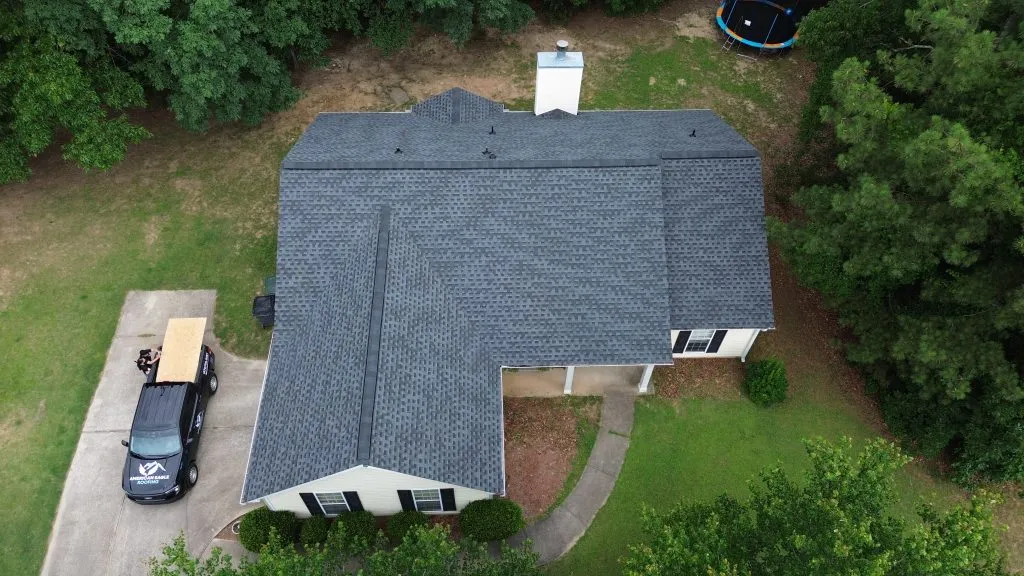

Georgia storms can be unpredictable. Between heavy rain, high winds, hail, and falling debris, your roof can take serious damage without you even realizing it. In fact, many roofs have significant storm damage long before a leak ever appears — and most homeowners don’t notice a problem until they see a leak, a water stain, or missing shingles weeks later. Here are 5 signs your roof may have storm damage after severe weather.
1. Missing or Lifted Shingles
One of the most common signs of storm damage is missing shingles. Strong winds can loosen or completely tear shingles off your roof, exposing the underlayment and decking underneath. Even a few missing shingles can allow water to enter your home over time.
2. Creased Shingles
One of the most common forms of wind damage is a creased shingle. When high winds bend a shingle back, the fiberglass mat inside can crack. The shingle may settle back into place, making it hard to spot from the ground, yet it can still allow water to penetrate underneath. Most homeowners never notice these because they require a close inspection.
3. Excessive Granules in the Gutters
Asphalt shingles are coated with protective granules that shield them from UV rays and weather. If you notice black or sand-like granules in your gutters or around downspouts, your shingles may be deteriorating from storm impact or age. Heavy granule loss weakens your roof’s ability to shed water and block the sun, and it’s especially common after hailstorms in Georgia.
4. Water Stains or Moisture in the Attic
Storm damage isn’t always visible from the outside — sometimes the first sign appears inside your home. Before water reaches your ceiling, it often appears in the attic. Water stains on ceilings or damp attic insulation often indicate compromised roofing materials or flashing damage caused by wind and storms.
5. Damaged Flashing or Other Components
Your flashing protects vulnerable roof areas like chimneys, valleys, vents, and pipe penetrations. During storms, flashing can crack, separate, or loosen. Other components that commonly suffer storm damage include ridge caps, pipe boots, and vents — and small failures in these areas can quickly become major leak points.
Why a Leak Isn’t the First Sign of Damage
Many homeowners assume they should wait until a leak develops before calling a roofing contractor. Unfortunately, by the time water enters your home, the damage has often spread to decking, insulation, drywall, and framing. Scheduling a professional roof inspection after a major storm lets problems be identified early — often before they become expensive repairs.
Does Homeowners Insurance Cover Storm Damage?
If your roof was damaged by wind or hail, your homeowners insurance policy may cover the cost of repairs or even a full replacement, depending on the extent of the damage and your policy. A qualified roofing contractor can document the damage, provide photographs, and assist you throughout the claims process. Coverage decisions are always made by your insurance company.
After a storm, don’t wait for a leak to appear. Call (470) 706-5057 or request a free roof inspection. To learn more about wind-specific damage, see our guide on wind damage signs — or explore our storm damage restoration services.