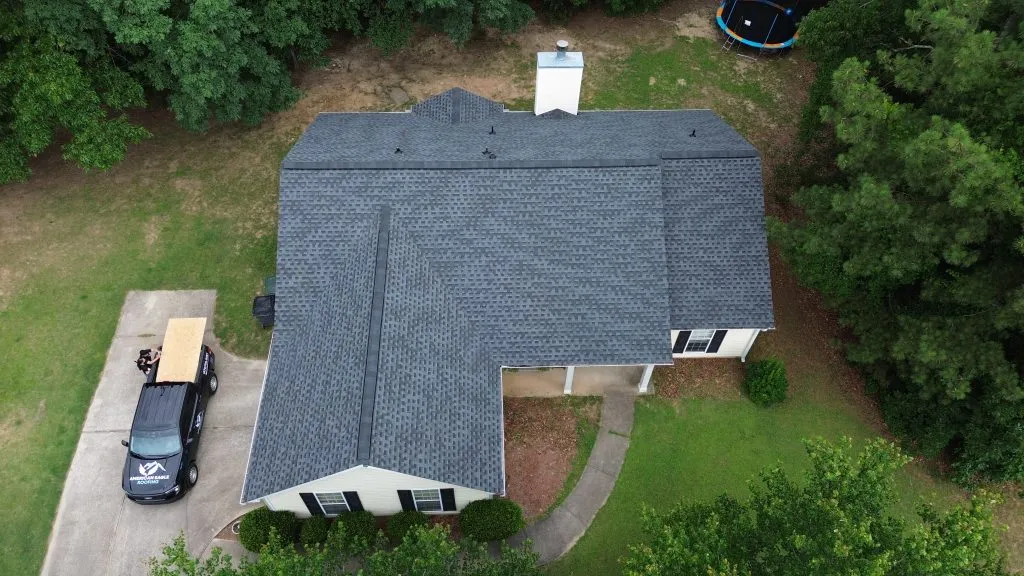
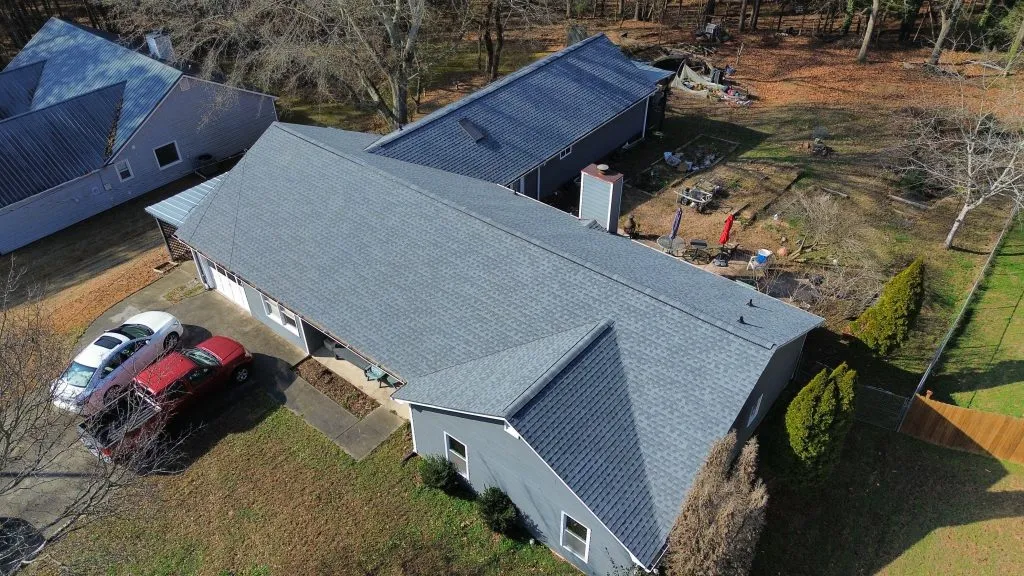
Georgia storms bring more than heavy rain. Hail — even hail that seems small at the time — can damage a roof without leaving an obvious sign from the ground. Knowing what to look for after a storm is the difference between catching a small problem early and discovering major damage months later. Here’s what hail damage actually looks like — and if the damage is extensive, our guide to what a roof replacement costs will help you plan.
Hail Damage is Often Not Visible from the Ground
Most hail damage is impossible to see from the street. Because asphalt shingles are made up of a fiberglass core covered in protective granules, the damage is often below the surface — a bruised or knocked area that doesn’t show a clean break you could spot with binoculars.
Key Signs of Hail Damage on Shingles
- Granule loss. After hail, you may find granules washed into the gutters or scattered at the base of downspouts. Heavy granule loss weakens the shingles and shortens their life.
- Bruising or “dimpling.” Press on a suspected spot — hail bruising feels like a soft, slightly spongy dent even when the shingle looks intact on top.
- Random, scattered impact marks. Hail damage looks different from aging: it’s random and scattered, not even across an entire roof or concentrated at the edges like wind damage.
- Dents in metal. Check ridge caps, vents, flashing, gutters, and AC units. Hail hard enough to dent metal hit the roof hard enough to cause damage.
A good clue is damage to soft metal like the flashing around your chimney or the metal trim on your gutters — if hail dented those, it almost certainly damaged the shingles nearby.
What Hail Size Means for Your Roof
In general, the larger the hail, the more likely it is to damage a roof — large hail can significantly damage roofing materials, while small pea-sized hail rarely does. But size at your house matters more than size reported in headlines across the region, because a storm can drop much larger hail in one neighborhood and almost nothing in another.
What to Do After a Hail Storm
- Don’t wait for water to appear in your house — damage can leak slowly through the decking for months.
- Document what you can safely see from the ground with photos, but don’t climb on a wet or damaged roof yourself.
- Have a professional do a free inspection. A roofer who gets on the roof can tell you whether damage is isolated or widespread — and that distinction usually decides whether a repair or a replacement is the right route.
An Inspection You Can Trust
After a storm, you want an honest read on how much of your roof is really affected. Our crew will inspect the whole roof, show you what we found, and lay out your options — a localized repair where that’s enough, or a full replacement where the damage is widespread.
Storm just rolled through your neighborhood? Call (470) 706-5057 or request a free roof inspection today. To learn more about the storm insurance process and how we handle storm damage restoration, we’re happy to walk you through every step.